
Logic Ladder: Pattern Puzzles
Opens in a play window — no download required.
Reviews
Logic Ladder: Pattern Puzzles focuses on visual deduction rather than speed or competition. Its strength lies in a gradual difficulty curve that introduces rotation, size changes, and multi-step logic without overwhelming the player. The clean interface and limited hint system encourage independent reasoning. It suits casual players, younger audiences, and anyone seeking a low-stress cognitive workout. The main limitation is a lack of described variety beyond pattern puzzles, which may leave players wanting more diverse challenge types.
Description
Spotting Relationships in Visual Grids
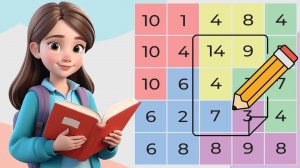
Every puzzle in Logic Ladder: Pattern Puzzles asks the same fundamental question: what comes next? You examine a grid, sequence, or set of symbols and identify the rule connecting them. The rule might involve alternating colors, a repeating shape, a rotation, or a size change. One puzzle might hinge on positional logic; the next might require two-step reasoning where you track two variables at once. The interface strips away distractions, presenting each challenge as a standalone problem so your attention stays on the pattern itself.
A Visual Style Built for Focus
Bright colors, soft gradients, and rounded shapes keep the screen easy on the eyes during longer sessions. Icons are distinct enough to tell apart at a glance but simple enough that they never compete with the puzzle logic. A neutral background ensures the grid remains the focal point. Animations are minimal and smooth, offering gentle confirmation when you select an answer without pulling your attention away from the next problem.
How Difficulty Climbs the Ladder
Early puzzles stick to basic pattern recognition: alternating colors or repeating shapes. As you advance, the game layers in rotation, size changes, and logical sequences that demand two-step reasoning. The curve is gradual, so strategies develop naturally rather than through trial and error. Most puzzles have no time limit, letting you think through each problem at your own pace. That structure makes the game approachable for younger players while still offering depth for experienced solvers.
Simple Controls, Broad Accessibility
Interaction is limited to tapping or clicking your chosen answer from a set of options. Clear visual feedback tells you whether you were right or wrong. Hints are available but limited, nudging you to rely on your own reasoning first. The interface adapts to different screen sizes, so the experience holds up on a phone, tablet, or computer. No reading is required to understand the puzzles, which keeps the game accessible across ages and language backgrounds.
Cognitive Engagement Without Stress
The game targets working memory and logical deduction without adding pressure. No timers or competitive elements means you can unwind after a busy day or keep your mind active during a short break. Solving a tricky pattern provides its own reward, and that satisfaction is what encourages continued play.
Compatibility
FAQ
Comments
Sign in to leave a note
You must be logged in before posting a review or rating.
No comments yet. Be the first to comment!



Editorial Notes