
Track Builder Brain Challenge
Opens in a play window — no download required.
Reviews
Track Builder Brain Challenge delivers a satisfying mental workout without any pressure. The core mechanic of arranging track pieces is simple to grasp but offers deep strategic layers as puzzles grow more complex. I appreciate the clean visual style, which keeps the focus on problem-solving. The physics feel natural, and the undo feature encourages experimentation. Each level feels like a small victory. It is an excellent choice for anyone who enjoys thoughtful, low-stress puzzles.
Description
Core Puzzle Mechanics
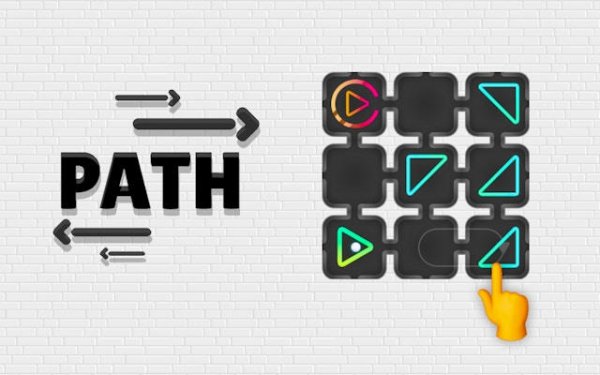
Players receive a grid with fixed start and end points. Scattered track pieces must be placed to form a continuous route. Each piece has a specific shape, such as a straight segment or a curve. Rotating these pieces is essential, as the correct orientation determines whether the sphere can travel smoothly. The challenge lies in visualizing how each piece connects to its neighbors. This mechanic tests spatial reasoning and encourages methodical thinking. Early levels introduce basic shapes, while later stages add more complex configurations that require careful sequencing.
Level Design and Progression
The game gradually increases in difficulty. Initial puzzles feature small grids with few pieces, allowing players to learn the placement system. As players advance, grids become larger and include more pieces, some of which may have multiple possible orientations. The design ensures that each puzzle feels distinct, avoiding repetition. Players must consider the order of placement, as a wrong piece can block the entire route. This progressive structure keeps the experience fresh and provides a steady sense of accomplishment as each puzzle is solved.
Visual Feedback and Physics
Once the track is assembled, the sphere rolls along the path. The physics simulation is smooth, making the movement feel natural. If the path is incomplete or has a gap, the sphere stops, providing clear feedback. This immediate response helps players understand their mistakes and adjust their strategy. The visual design is clean and uncluttered, focusing attention on the puzzle itself. Colors are used to distinguish different track types, aiding quick recognition. The overall aesthetic supports the logical nature of the game without unnecessary distractions.
Accessibility and Session Length
Each puzzle can be completed in a few minutes, making the game suitable for short breaks. The controls are straightforward: click or tap a piece to select it, then drag it to the desired position. Rotation is handled with a simple tap or button. There is no time pressure, allowing players to think at their own pace. This design makes the game accessible to a wide audience, from children to adults. The lack of complex menus or tutorials means players can start solving puzzles immediately.
Strategic Approaches
Experienced players often develop strategies to solve puzzles more efficiently. One common approach is to start from the endpoint and work backward, which can clarify which pieces are needed. Another is to group similar pieces together before placing them. The game rewards patience and careful observation. Some puzzles may have multiple valid solutions, encouraging creative thinking. Players who take time to study the grid before acting tend to solve puzzles faster and with fewer mistakes.








Comments
Sign in to leave a note
You must be logged in before posting a review or rating.
No account? Create one
No comments yet. Be the first to comment!